
Key Takeaways
- The Pill is a Mask, Not a Cure: Birth control pills force regular withdrawal bleeds, but they do not treat the underlying hormonal or metabolic roots of Polycystic Ovary Syndrome (PCOS).
- The Real Culprit is Insulin Resistance: For most women, PCOS is driven by high insulin levels that trigger the ovaries to produce excess male hormones (androgens).
- Root-Cause Healing Works: True management focuses on stabilizing blood sugar, lowering systemic inflammation, and supporting natural ovulation through lifestyle, nutrition, and targeted medical guidance.
- Expert Clinical Support: Dr. Lakshmi Priya, consultant gynaecologist and fertility specialist across Apollo Cradle, Birla Fertility & IVF, and Fortis Hospitals, helps women move past temporary quick fixes to achieve lasting hormonal balance.
Picture this: You are sitting in a clinic, staring down at your lab results after months of dealing with stubborn weight gain, random chin hairs, and periods that show up whenever they feel like it. The doctor nods sympathetically, writes down a prescription for a standard pack of birth control pills, and says, “This will regulate your cycle. Come back if you want to get pregnant later.”
You walk out of the clinic feeling like you finally have a plan. But have you ever wondered what actually happens when you pop that daily pill?
If you stop taking it two years later, your irregular periods, acne, and frustrating symptoms come rushing right back. Why? Because the pill never actually treated your PCOS. It just hit the pause button.
As a consultant gynaecologist seeing patients daily at Apollo Cradle, Birla Fertility & IVF, and Fortis Hospitals, I hear this story almost every single day. Women are tired of temporary band-aids. They want to know why their bodies are rebelling, and more importantly, how to fix the root cause.
What is PCOS, Really? (Beyond the Ovaries)
Polycystic Ovary Syndrome is one of the most common hormonal disorders in women, yet it is widely misunderstood. Despite the name, PCOS is not actually a disease of the ovaries. Your ovaries are just reacting to chemical signals sent from the rest of your body.
PCOS is fundamentally a metabolic and endocrine condition. The core driver for roughly 70 to 80 percent of women with PCOS is insulin resistance.
Think of insulin as the key that unlocks your cells to let sugar (glucose) in for energy. When you have insulin resistance, your cells lock their doors and ignore the key. Your pancreas panics and pumps out a massive wave of extra insulin to force the sugar in.
What does extra insulin do to your reproductive system? It signals your ovaries to overproduce male hormones called androgens (like testosterone). These high androgen levels stop your eggs from maturing properly, prevent ovulation, and trigger all those frustrating symptoms you hate.
According to the World Health Organization (WHO), PCOS affects millions of reproductive-age women globally, yet a large percentage remain undiagnosed because treatments often focus solely on surface symptoms rather than metabolic health.
Why the Birth Control Pill is Just a Band-Aid
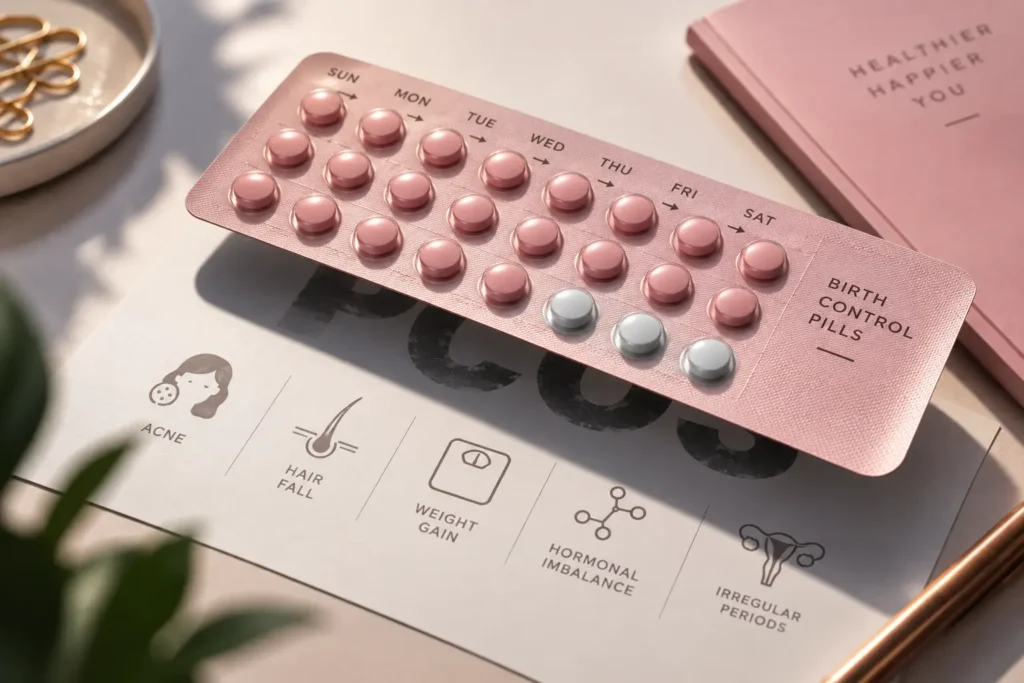
Birth control pills contain synthetic versions of estrogen and progestin. When you take them, they override your natural brain-to-ovary communication system.
Here is what the pill actually does:
- It forces a fake bleed: The bleeding you get on the pill’s 7-day break is not a real period. It is a withdrawal bleed caused by the sudden drop in synthetic hormones. Your ovaries are still fast asleep in the background.
- It binds up androgens: The synthetic hormones in the pill increase a protein in your liver called Sex Hormone-Binding Globulin (SHBG). SHBG traps your free testosterone so it cannot cause acne or unwanted hair growth.
- It shuts down ovulation: By blocking your brain from sending signals to release an egg, it prevents natural cycles entirely.
The moment you throw away that pill pack to start a family or take a break from medication, your underlying insulin resistance and high androgens are still right there waiting. Your body has not healed; it was simply muted.
As the Endocrine Society highlights in clinical practice guidelines, managing the metabolic components of PCOS—such as blood sugar regulation—is vital for long-term health, as untreated insulin resistance significantly increases the risk of type 2 diabetes and cardiovascular issues over time.
The Hidden Dangers of Masking the Problem
Relying solely on birth control pills for years without addressing metabolic health can sometimes sweep bigger issues under the rug.
When high insulin and inflammation are left unchecked, they continue to work silently beneath the surface. Over time, this increases your risk for:
- Type 2 Diabetes: Because your pancreas has been working overtime for a decade to push through insulin resistance.
- Endometrial Hyperplasia: If you are not shedding your uterine lining naturally through regular ovulation, the lining can build up excessively, raising long-term uterine cancer risks.
- Fertility Roadblocks: When you finally decide you are ready to have a baby, you may discover that ovulation is still entirely absent, leading to heartbreaking delays and unexpected fertility struggles.
How to Fix the Root Cause of PCOS
Healing PCOS requires shifting your mindset from “managing symptoms” to “restoring metabolic balance.” You have to look at what is fueling the fire inside your cells.
1. Rebuild Your Insulin Sensitivity
Since insulin resistance is usually the main engine driving PCOS, calming your blood sugar is your most powerful tool.
- Prioritize Protein and Fiber: Every time you eat a carbohydrate, pair it with healthy fats, fiber, and clean protein to flatten your blood sugar curves. Avoid naked carbs like white bread or sugary snacks that cause sharp insulin spikes.
- Move Your Muscles: Strength training and brisk walking help your muscle cells absorb glucose without needing massive amounts of insulin. You do not need punishing, two-hour cardio sessions; consistency is what matters.
2. Cool Down Systemic Inflammation
Chronic low-grade inflammation worsens insulin resistance and aggravates ovarian tissue.
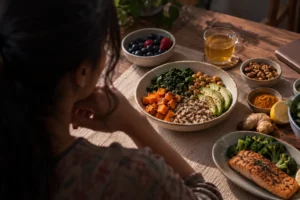
- Focus on an anti-inflammatory lifestyle rich in colorful vegetables, omega-3 fatty acids (found in walnuts, flaxseeds, and fish), and antioxidant-heavy whole foods.
- Reduce ultra-processed foods and trans fats that feed inflammatory pathways in the body.
3. Support Natural Ovulation
When your blood sugar stabilizes and inflammation drops, your brain and ovaries start communicating clearly again. Supplements like Myo-Inositol and D-Chiro-Inositol have been clinically shown in numerous studies to help lower insulin resistance and restore natural ovulation cycles without synthetic drugs.
Taking Control of Your Hormonal Health
Living with PCOS can feel like an exhausting guessing game. You might try strict diets, intense workouts, and endless supplements, only to feel frustrated when your body refuses to cooperate. You do not have to figure this out alone in the dark.
Whether you are trying to clear your skin, gain control of your energy, or prepare your body for a future pregnancy, true wellness starts with treating the root cause, not just masking the symptoms.
If you are ready to move past temporary fixes and build a personalized, long-term roadmap for your hormonal health, let’s look at the science together. As a consultant across Apollo Cradle, Birla Fertility & IVF, and Fortis Hospitals, I work closely with women every day to decode their bodies, fix metabolic imbalances, and restore natural harmony.
Book a consultation today, bring your previous lab work, and let us build a sustainable plan tailored specifically for your body.