

Key Takeaways
- Diet is a Powerful Catalyst: While food is not a surgical cure for endometriosis, changing what you eat can dramatically lower systemic inflammation and ease painful flare-ups.
- The Culprits of Pelvic Inflammation: High intake of trans fats, red meats, and processed sugars can trigger prostaglandins, which worsen painful uterine contractions.
- Root-Cause Support: Focusing on an anti-inflammatory, gut-friendly diet helps regulate estrogen levels and calms down overactive pain pathways.
- Expert Clinical Support: Dr. Lakshmi Priya, consultant gynaecologist and fertility specialist across Apollo Cradle, Birla Fertility & IVF, and Fortis Hospitals, helps women build comprehensive medical and lifestyle strategies to reclaim their daily lives from chronic pelvic pain.
Picture this: Every month, you brace yourself for a week that feels like your lower abdomen is trapped in a vise. You load up on painkillers, use heating pads around the clock, and cancel plans because the cramping, bloating, and fatigue are simply too severe to push through. When you finally talk to someone about it, you are often told, “Severe period pain is just part of being a woman. Take some ibuprofen and rest.”
You know deep down that debilitating pain which leaves you curled up on the bathroom floor is not normal.
If you are living with endometriosis, your immune system and your hormones are caught in a constant, painful loop of chronic inflammation. As a consultant gynaecologist seeing patients daily at Apollo Cradle, Birla Fertility & IVF, and Fortis Hospitals, I hear this exhaustion from patients every single week. Women are tired of masking severe pain with endless painkillers. They want to know what they can do in their own kitchen to help quiet the fire.
What is Endometriosis, Really? (Beyond Bad Cramps)
Endometriosis is a condition where tissue similar to the lining of the uterus—the endometrium—grows outside the uterus, attaching itself to your ovaries, fallopian tubes, outer uterine surface, and other pelvic organs.
Every month, when your hormone levels fluctuate, these misplaced patches of tissue attempt to bleed and shed just like your regular uterine lining. But because that trapped blood has nowhere to exit your body, it irritates surrounding tissues, forms painful adhesions, and creates severe internal inflammation.
This chronic inflammation is what drives the signature agony of endometriosis: crushing pelvic pain, deep pain during intercourse, severe bowel discomfort during your cycle, and exhausting fatigue.
According to the World Health Organization (WHO)
, endometriosis affects approximately 10 percent of reproductive-age women globally, yet the average delay from symptom onset to proper diagnosis can take up to seven to ten years because the condition is so frequently dismissed.
How Food Fuels (or Cools) Endometriosis Inflammation
Your diet plays a direct role in regulating the inflammatory chemicals circulating in your body. When you have endometriosis, your immune system is already hyper-reactive.
Here is how certain foods can make your pain worse:
- The Prostaglandin Spike: Diets heavy in processed vegetable oils, trans fats, and red meats increase the production of inflammatory compounds called prostaglandins. These are the exact chemicals that force your uterus and pelvic tissue to cramp violently.
- Estrogen Dominance: Endometriosis is an estrogen-dependent disease. If your gut microbiome is sluggish, your body struggles to eliminate used estrogen. Instead, it reabsorbs it, causing excess estrogen to fuel the growth of endometrial lesions.
- Gut Permeability: High-sugar and ultra-processed diets can disrupt your gut lining, leading to systemic inflammation that directly mirrors and worsens pelvic pain.
As research published through major medical bodies highlights, managing systemic inflammation through targeted dietary shifts can significantly reduce pelvic pain scores and improve overall quality of life for patients.
The Hidden Dangers of Ignoring Inflammation
Relying solely on high-dose pain medications without addressing underlying inflammation means the disease environment inside your pelvis remains active.
When chronic inflammation is left unchecked, it can lead to:
- Severe Tissue Adhesions: Continuous irritation causes pelvic organs to stick together, worsening pain and distorting pelvic anatomy.
- Fertility Roadblocks: Inflammation and scar tissue around the fallopian tubes and ovaries can make natural conception difficult, often requiring specialized fertility interventions.
- Chronic Fatigue and Burnout: Living with unmanaged daily pain depletes your nervous system, impacting your mental health, work, and relationships.
How to Eat to Calm Endometriosis Flares
Changing your diet will not magically make deep infiltrating lesions disappear overnight, but it is one of the most powerful tools you have to slash your pain levels and regain control of your body.
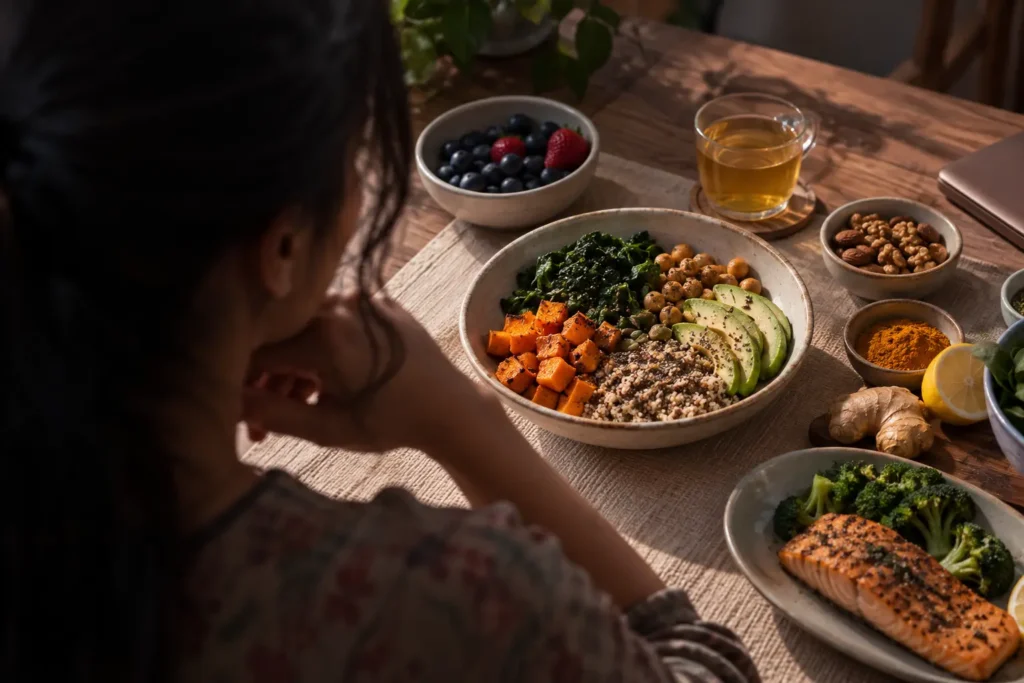
1. Flood Your Body with Omega-3 Fatty Acids
Omega-3s are nature’s anti-inflammatory powerhouse. They actively block the pathways that produce painful prostaglandins.
- Load up on fatty fish like salmon or mackerel, or incorporate plant-based sources like chia seeds, flaxseeds, and walnuts into your daily meals.
2. Prioritize Fiber to Clear Excess Estrogen
Your digestive system is responsible for packaging and excreting old hormones. If you are constipated, your body reabsorbs estrogen.
- Eat plenty of leafy greens, cruciferous vegetables (like broccoli, cauliflower, and cabbage), and whole grains to keep your digestion moving and clear excess estrogen out of your system.
3. Eliminate Inflammatory Trigger Foods
Many women with endometriosis notice a dramatic reduction in bloating and pain when they minimize specific triggers.
- Cut back on refined sugars, excessive dairy, gluten, and processed vegetable oils, all of which are known to fuel gut inflammation and immune flare-ups.
Taking Control of Your Pelvic Health
Living with endometriosis can make you feel like your body is working against you. You might try changing your routine, cutting out foods, and searching for answers late at night, only to feel overwhelmed by conflicting wellness advice. You do not have to figure this out alone.
Whether you are trying to manage daily pelvic pain, protect your future fertility, or find a comprehensive medical and surgical strategy, true relief comes from a partnership built on listening and advanced clinical expertise.
As a consultant across Apollo, Birla Fertility & IVF, and Fortis Hospitals, I work closely with women every day to evaluate their symptoms, map out advanced treatment options, and build sustainable lifestyle plans that genuinely restore your quality of life.
Book a consultation today, bring your previous scans or medical reports, and let us work together to find a clear path forward for your body.