

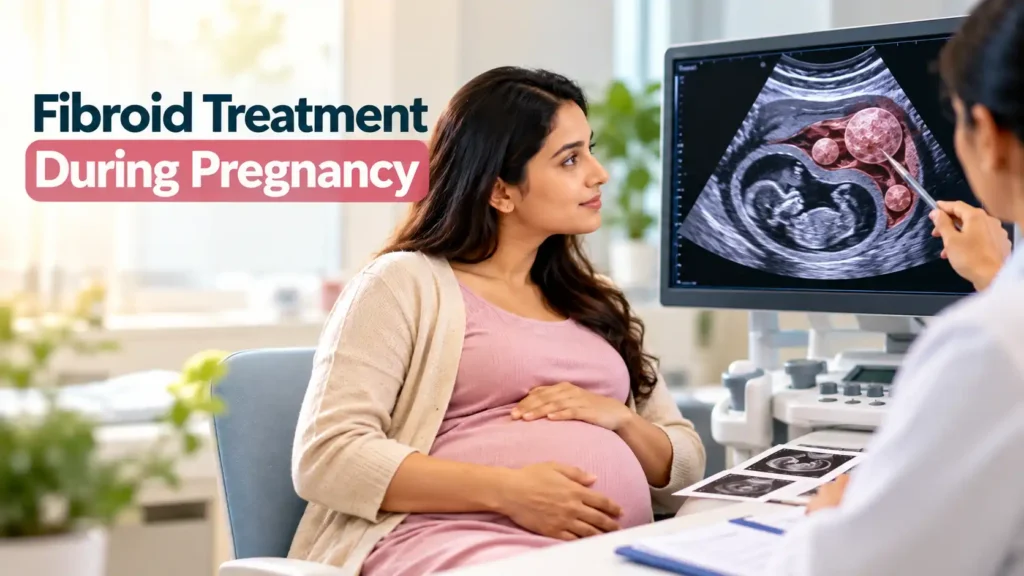
You are pregnant, or hoping to be, and a scan shows a fibroid. The first thought is often a scary one. Will it hurt my baby? Will I need an operation?
For most women, the answer is calm and reassuring. Fibroids are common, most pregnancies with fibroids go well, and surgery during pregnancy is rare. Safe fibroid treatment in Bangalore starts with three simple questions: which type of fibroid you have, where it sits, and whether it is truly causing a problem.
Key Takeaways
- Fibroids are found in about 1.6% to 10.7% of pregnancies.
- Most pregnancies with fibroids are uncomplicated. About 10% to 30% of women have a complication, and painful red degeneration affects about 8%.
- Risk is higher with multiple fibroids, fibroids larger than 5 cm, or fibroids in the lower part of the uterus.
- Submucosal fibroids are linked to about a 70% drop in delivery rates in assisted reproduction. Intramural fibroids are linked to about a 30% drop.
- Subserosal fibroids do not appear to affect fertility, and removing them does not improve outcomes.
- Fibroid removal during pregnancy is kept for rare emergencies. Most women with fibroids can deliver vaginally.
Types of Fibroids: Why Location Matters More Than Size
Uterine fibroids are non-cancerous growths of the womb muscle. As the NHS fibroid guidance explains, many cause no symptoms and do not always need treatment.
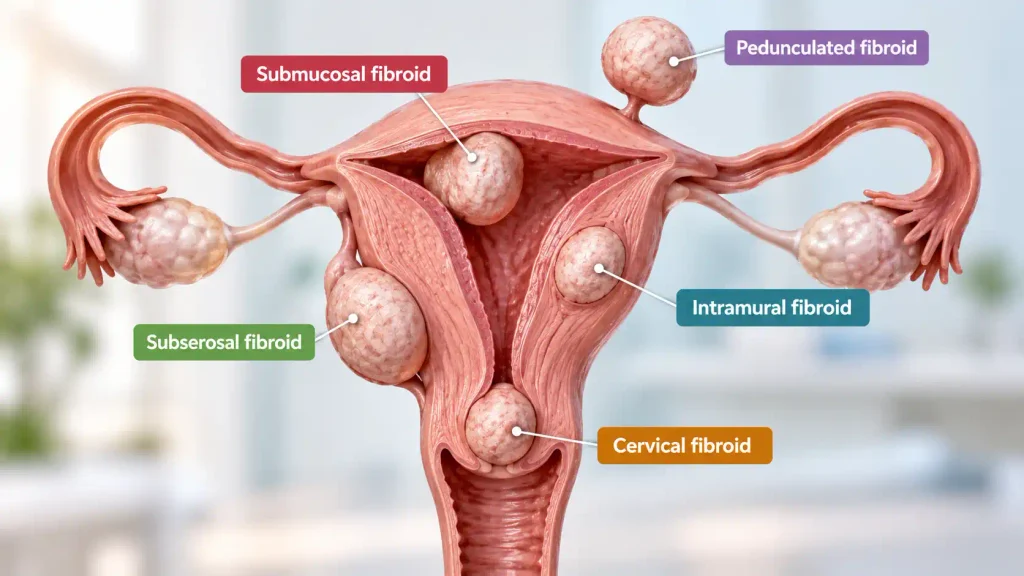
Doctors group fibroids by where they grow:
- Submucosal fibroid: bulges into the uterine cavity, where the embryo implants.
- Intramural fibroid: grows inside the muscle wall of the uterus.
- Subserosal fibroid: grows on the outer surface of the uterus.
- Pedunculated fibroid: hangs on a thin stalk, inside or outside the uterus.
- Cervical fibroid: a rare type in the cervix that can block the birth canal.
Do Fibroids Cause Infertility? The Ones That Actually Matter
Not every fibroid affects fertility. Research on fibroids and fertility shows one clear pattern. The closer a fibroid sits to the uterine lining, the more it can get in the way.
1. Submucosal Fibroid: The Biggest Concern
A submucosal fibroid changes the shape, blood flow and lining of the cavity. This makes it harder for an embryo to attach and grow. It can lower your chance of getting pregnant. It can also raise the risk of loss.
The good news is that taking it out helps. A 2009 meta-analysis found that taking out submucosal fibroids seems to improve fertility outcomes. Most can be removed through hysteroscopy, with no cuts on the tummy.
2. Intramural Fibroid and Pregnancy: It Depends
An intramural fibroid has a smaller effect, and the link is less sure. If it presses on the cavity, it behaves much like a submucosal fibroid. If it is small and sits away from the cavity, it often causes no trouble at all.
3. Subserosal Fibroids: Usually Not a Fertility Problem
Subserosal fibroids grow outward, away from the lining. They rarely stop you from getting pregnant. Most are left alone unless they cause pain or pressure.
| Feature | Submucosal | Intramural | Subserosal |
|---|---|---|---|
| Where it grows | Into the uterine cavity | Inside the muscle wall | On the outer surface |
| Effect on fertility | Strong and clear | Mild to moderate, depends on size and cavity contact | Little or none |
| Miscarriage risk | Raised | May be raised | Not clearly raised |
| Effect on IVF | Lower implantation and live birth rates | Possible small drop | No clear effect |
| Common pregnancy issues | Bleeding, early pregnancy loss | Pain, preterm labour, breech baby if large or low | Pain if it degenerates or twists |
| Usual plan before pregnancy | Hysteroscopic removal | Remove if large, painful or touching the cavity | Usually leave alone |
“Many women come to me worried about the size of their fibroid. For fertility, location matters far more than size. A 2 cm fibroid inside the cavity can affect implantation, while a 6 cm fibroid on the outside may cause no trouble at all.” Dr. Lakshmi Priya
Fibroid During Pregnancy: What to Expect
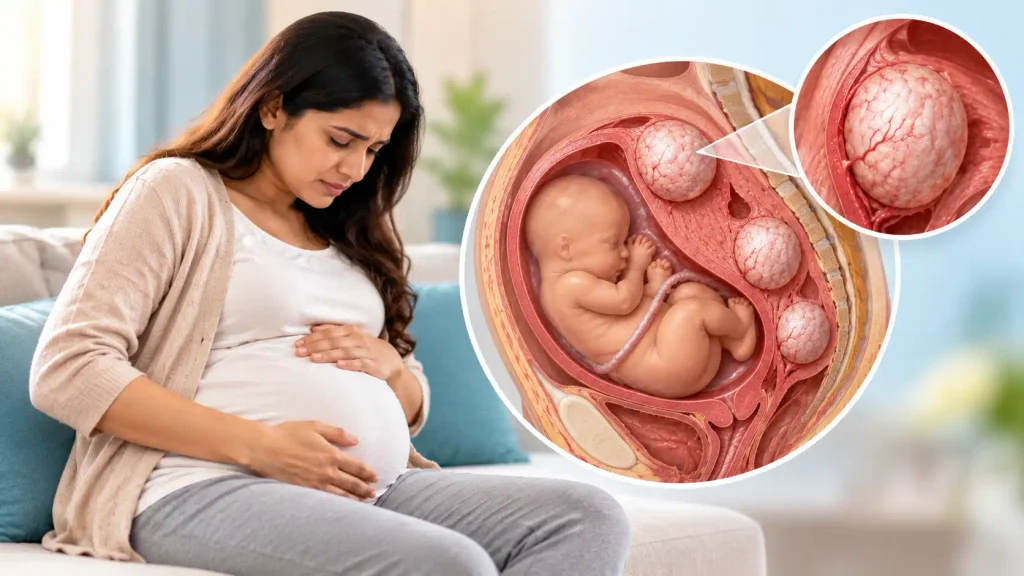
Pregnancy hormones and extra blood flow can make fibroids grow. Most of this growth happens in the first three months. Many fibroids do not change much at all, and many shrink again after the baby is born.
1. Fibroid Symptoms in Pregnancy
Most women feel nothing. When fibroid symptoms do appear, they may include:
- Pain in one spot of the tummy, often in the second trimester
- Low fever or nausea along with that pain
- Spotting or light bleeding
- Pressure on the bladder or bowel
- A bump that feels larger than expected for your dates
Sudden, sharp pain is often red degeneration. This happens when a fibroid grows faster than its blood supply. It hurts, but it usually settles within days with rest and pain relief.
2. Fibroid and Miscarriage
Submucosal and intramural fibroids are linked to a higher risk of early pregnancy loss. Subserosal fibroids are not. Still, most women with fibroids carry their babies to term.
If you have had a miscarriage and know you have fibroids, a check before your next pregnancy is wise. A good review looks at fibroids along with other possible causes.
3. Later Pregnancy and Delivery Risks
A large review found fibroids can raise the chance of:
- Preterm birth
- Breech or other unusual baby positions
- Placental abruption or a low-lying placenta
- Caesarean section
- Heavy bleeding after birth
These risks are real, but they are not a sure thing. Close check-ups help catch problems early.
When Is Surgery Really Needed During Pregnancy?
Rarely. Taking out a fibroid while pregnant is called a myomectomy. It can cause heavy bleeding, pregnancy loss or early labour. So doctors only operate when the fibroid itself has become the bigger danger.
1. Rare Situations Where Surgery May Be Considered
- Severe pain from degeneration that does not settle with rest and medicines
- A pedunculated fibroid that has twisted on its stalk
- A very large fibroid growing fast and pressing on the kidneys or bowel
- Signs of infection in a fibroid, which is very rare
When surgery is truly needed, timing and team work matter a lot. It is done in a hospital set up to care for both mother and baby.
2. Why Fibroids Are Usually Left Alone at Caesarean Section
At full term, the womb has a very rich blood supply. Taking out fibroids during a C-section can cause heavy bleeding. Expert advice is to avoid it when you can. A small fibroid on a stalk, or one in the way of the cut, may be the exception.
3. Fibroid Size for Surgery: Does Size Alone Decide?
No. In pregnancy, no size on its own means you need surgery. Your symptoms and any problems guide the choice.
Before pregnancy, size matters more. Many experts suggest taking out an intramural fibroid that is larger than about 4 to 5 cm or that touches the cavity. Any submucosal fibroid that changes the shape of the cavity is worth treating.
“Surgery in pregnancy is a last resort, not a routine step. Most women with a painful fibroid settle with rest, safe pain relief and close monitoring. We operate only when the fibroid becomes a bigger risk than the surgery itself.” Dr. Lakshmi Priya
Fibroid Treatment Without Surgery During Pregnancy
Almost all care in pregnancy is done without surgery. A typical plan has these parts:
- Rest and fluids during painful episodes
- Paracetamol as the first choice for pain
- Other pain medicines only for a short time and only on your doctor’s advice, as some are avoided later in pregnancy
- Hospital care for stronger pain relief if needed
- Regular scans to check the baby’s growth and the placenta’s position
- Iron checks to catch anaemia early
- A clear birth plan, including where to deliver and blood availability
Hormone drugs, fibroid embolisation and heat-based fibroid procedures are not used in pregnancy. These options come before or after your baby, not during.
Fibroid Removal Surgery Before Pregnancy: When It Makes Sense
The best time to deal with a problem fibroid is before you get pregnant. Good planning can lower risks and protect your chances. Many couples who come in for fibroid treatment in Bangalore before IVF or natural conception find that one well-timed step saves months of worry.
1. Hysteroscopic Removal for Submucosal Fibroids
A thin camera goes in through the cervix to take out the fibroid. There are no cuts on the skin. Most women go home the same day and are back to normal work in a few days.
2. Laparoscopic Myomectomy for Larger Fibroids
Laparoscopic myomectomy is keyhole surgery for intramural and subserosal fibroids. It is often the right step when a fibroid causes heavy bleeding, pain or pressure. It also helps when a fibroid changes the cavity or is large before IVF.
Most women wait about three to six months before trying for a baby, so the womb can heal. If the fibroid was deep in the wall, a planned C-section may be safer later. Our page on fibroid management surgery explains these steps in more detail.
3. Fibroids and IVF
Submucosal fibroids are most often taken out before embryo transfer. Intramural fibroids that do not touch the cavity may lower success a little, so the choice is made case by case. Planning fibroid care with your IVF treatment helps avoid wasted cycles.
How Fibroid Treatment in Bangalore Is Planned for Pregnant Women
Every pregnancy with fibroids needs a plan made for you. Good fibroid treatment in Bangalore tends to follow these steps:
- Detailed scan mapping: number, size, type and position of each fibroid, especially near the placenta or cervix
- Risk grouping: low-risk fibroids get routine care, while larger or low-lying ones get closer follow-up
- Scan schedule: extra growth scans in the second and third trimester when needed
- Pain plan: clear advice on safe medicines and when to come in
- Birth planning: choosing the mode and place of delivery with backup for heavy bleeding
- After-birth review: a scan a few months after delivery to decide on future treatment
Women with large fibroids, or many of them, often do well with high-risk pregnancy care with a team that handles both obstetrics and surgery.
“When a pregnant woman has fibroids, my first job is to map them clearly and explain what they mean for her. Once she knows the fibroid is away from the placenta and cervix, much of the fear goes away. The rest is careful follow-up, not surgery.” Dr. Lakshmi Priya
Warning Signs That Need Urgent Care
Call your doctor or go to the hospital if you notice:
- Severe or constant tummy pain
- Vaginal bleeding at any stage
- Fever along with pain
- Regular tightening before 37 weeks
- Your baby moving less than usual
Questions to Ask at Your Fibroid Visit
A clear talk with your doctor can ease a lot of worry. When you go for fibroid treatment in Bangalore, it helps to ask:
- What type of fibroid do I have, and where is it?
- How big is it, and has it grown since my last scan?
- Is it close to the placenta or the cervix?
- Could it affect my baby’s growth or position?
- What pain relief is safe for me, and when should I call you?
- Will I be able to have a normal birth?
- Do I need any treatment after the baby is born?
Write your answers down. They will help you plan each step with less fear.
Final Thought
A fibroid on your pregnancy scan can feel scary, but it rarely means surgery. What matters most is knowing the type, its position and how it behaves over time. With clear mapping and steady follow-up, most women with fibroids go on to have healthy babies.
If you are pregnant or planning a pregnancy and have fibroids, an early review can give you clarity and peace of mind. Thoughtful fibroid treatment in Bangalore is about the right care at the right time. Book a consultation with Dr. Lakshmi Priya to discuss your scan and your options.
Frequently Asked Questions
1. Can fibroids affect pregnancy and the baby’s growth?
Most fibroids do not affect how your baby grows. Very large fibroids, or those near the placenta, can sometimes take up space or reduce blood flow. Growth scans help your doctor spot any problem early, so it can be managed in time.
2. Is fibroid treatment safe during pregnancy?
Yes, when it is the right care for your stage of pregnancy. Rest, paracetamol and close check-ups are safe for most women. Hormone drugs and fibroid procedures wait until after the baby is born.
3. When is surgery really needed for fibroids during pregnancy?
Surgery is needed only in rare cases. These include severe pain that does not improve with medicines, a twisted fibroid on a stalk, or a fast-growing fibroid pressing on other organs. Your doctor weighs the risk of surgery against the risk of waiting.
4. Can fibroids cause miscarriage or other pregnancy complications?
Submucosal and intramural fibroids can raise the risk of early miscarriage. Fibroids may also raise the chance of preterm birth, breech position or heavy bleeding after delivery. Still, most women with fibroids have healthy pregnancies.
5. What fibroid size may require surgery during pregnancy?
No size on its own means surgery in pregnancy. Fibroids over 5 cm carry more risk, so they need closer follow-up. The choice depends on your symptoms and any problems, not just the number on the scan.
6. Can an intramural fibroid affect pregnancy or delivery?
Yes, it can, especially if it is large or low in the uterus. It may cause pain, preterm labour or a breech baby, or raise the chance of a caesarean. Small intramural fibroids usually cause no problems.
7. Can a submucosal fibroid cause infertility or miscarriage?
Yes. A submucosal fibroid is the type most clearly linked to infertility and miscarriage, as it affects the lining where the embryo implants. Removing it through hysteroscopy often improves the chances of pregnancy.
8. Can fibroids be removed during pregnancy with a myomectomy?
It is possible but rarely done. Myomectomy in pregnancy can cause bleeding and pregnancy loss, so it is kept for emergencies. Most fibroids are simply watched during pregnancy and treated later if needed.
9. Is fibroid removal surgery recommended before trying to conceive?
It depends on the fibroid. Submucosal fibroids and large intramural fibroids that touch the cavity are often removed before pregnancy. Small fibroids away from the cavity usually do not need surgery.
10. Can fibroids affect fertility and the chances of natural pregnancy?
Some can. Submucosal fibroids clearly lower the chances of pregnancy, and large intramural fibroids may have a smaller effect. Many women with fibroids still conceive naturally without any treatment.
11. When is laparoscopic myomectomy recommended for uterine fibroids?
Laparoscopic myomectomy is advised for intramural or subserosal fibroids that cause heavy bleeding, pain, pressure or fertility problems. It is also considered for larger fibroids before IVF. Keyhole surgery means smaller scars and a faster recovery.
12. Can fibroid treatment without surgery be considered during pregnancy?
Yes, and it is the standard approach. Care includes rest, safe pain relief, iron checks and regular scans. Surgery is only considered if these steps fail or a serious complication develops.
13. Can fibroids affect IVF success or embryo implantation?
Submucosal fibroids clearly lower implantation and live birth rates in IVF. Intramural fibroids may lower success slightly, while subserosal fibroids usually have no effect. Your doctor will check the cavity before embryo transfer.
14. What are the treatment options for fibroids during pregnancy in Bangalore?
Fibroid treatment in Bangalore during pregnancy is mostly about check-ups, safe pain relief and a good birth plan. Hospital care helps with severe pain, and surgery is kept for rare emergencies. Any lasting treatment is planned after the baby is born.
15. How is fibroid treatment in Bangalore planned for pregnant women?
Planning begins with a detailed scan to map every fibroid. Your doctor then sets a scan schedule, a pain plan and a birth plan suited to your risk level. A review after delivery helps decide on any future treatment.